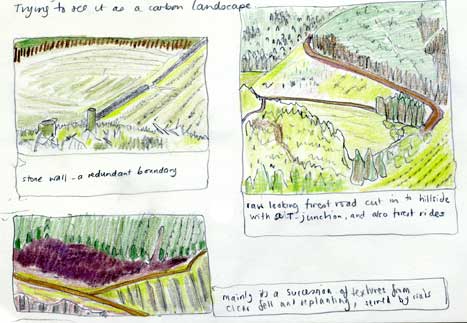
Many kilometres of new forest and cycling tracks up here on Minchmoor. I was tracing one of the oldest roads in Scotland, that leads south east from Traquair towards Selkirk. Cattle, and latterly sheep, were driven to English markets.
Many kilometres of new forest and cycling tracks up here on Minchmoor. I was tracing one of the oldest roads in Scotland, that leads south east from Traquair towards Selkirk. Cattle, and latterly sheep, were driven to English markets.
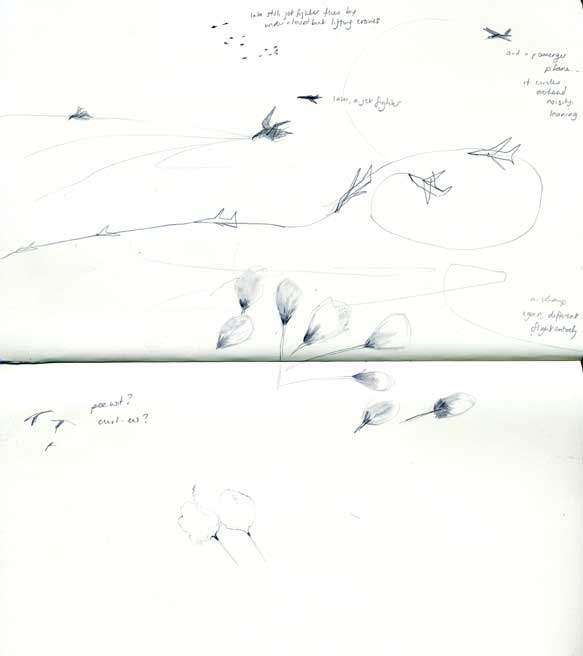
I went to read the poem inscribed on the Ogilvie Monument:
With cotton flowers that wave to us
And lone whaups that call …
I settled down, and watched the curlews’ distinctive flight

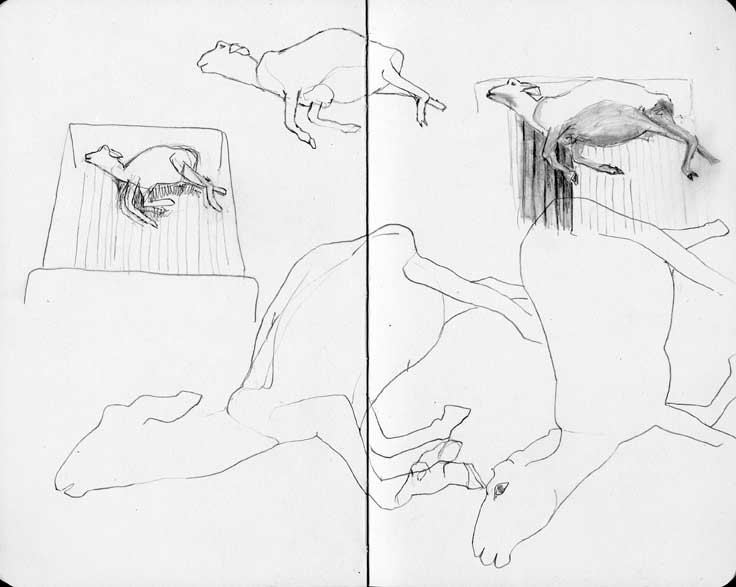
Formerly, they were buried. Can be burnt but that is expensive. Now removed to Staffordshire, where there is a rendering plant. They get boiled up.

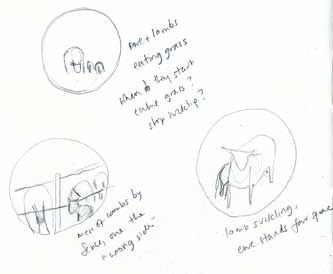
using a telescope:ewe and lambs eating grass. When do the start eating grass? stop suckling?
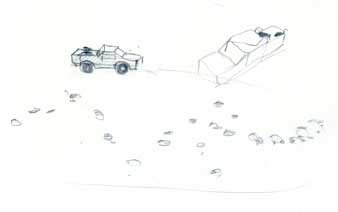
a jeep, man, two dogs, going through the ewe and lambs’ field, separating out the sheep – dogs jump out and assist on command, sitting looking out the back constantly
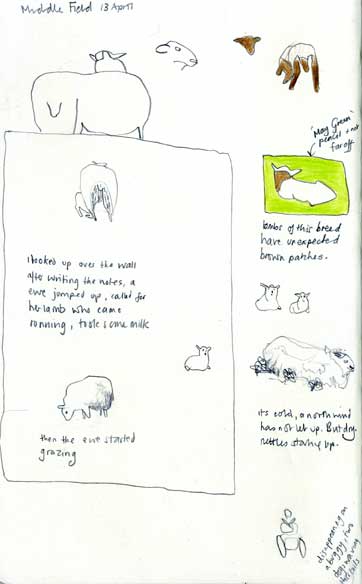
Middle Field, 13 April
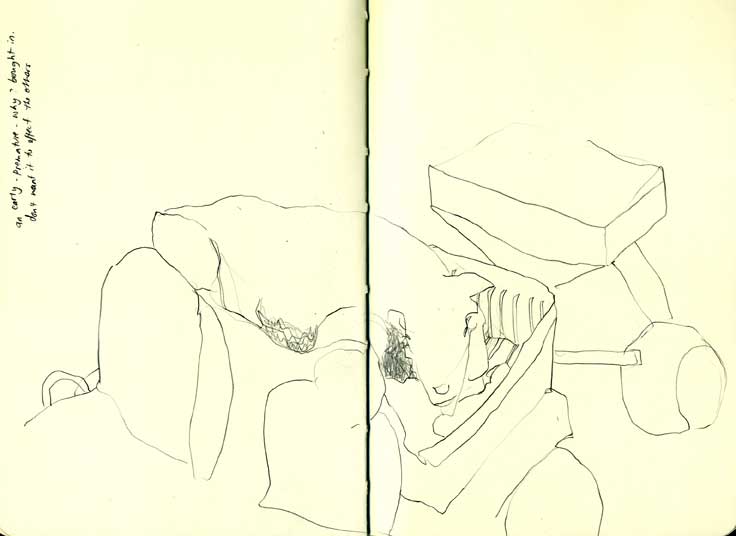
an early – premature lamb – brought in. Don’t want this problem to affect the others.
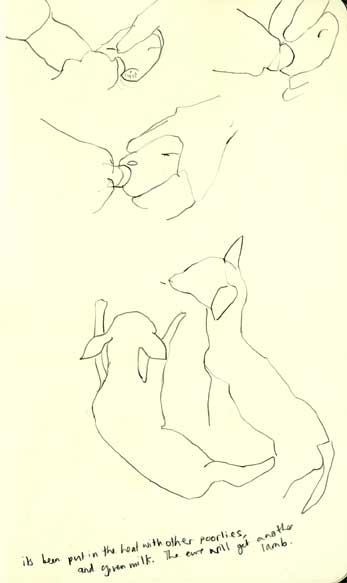
She tried to leap off the ‘Gator’ after her lamb had been removed. It’s been put into the heat with other poorlies, and given milk. The ewe will get another lamb.
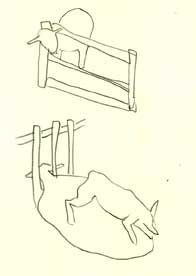
ewe in ‘adopter’, adoptee climbs its back
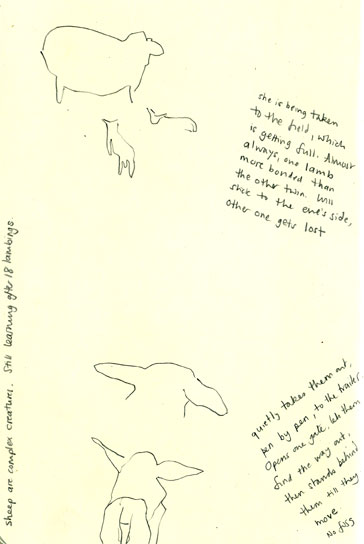
“Sheep are complex creatures, still learning after 18 years.”.. The ewe is being taken to the field, which is getting full. Almost always one lamb is more bonded than the other twin. Will stick to the ewe’s side, the other one can get lost.
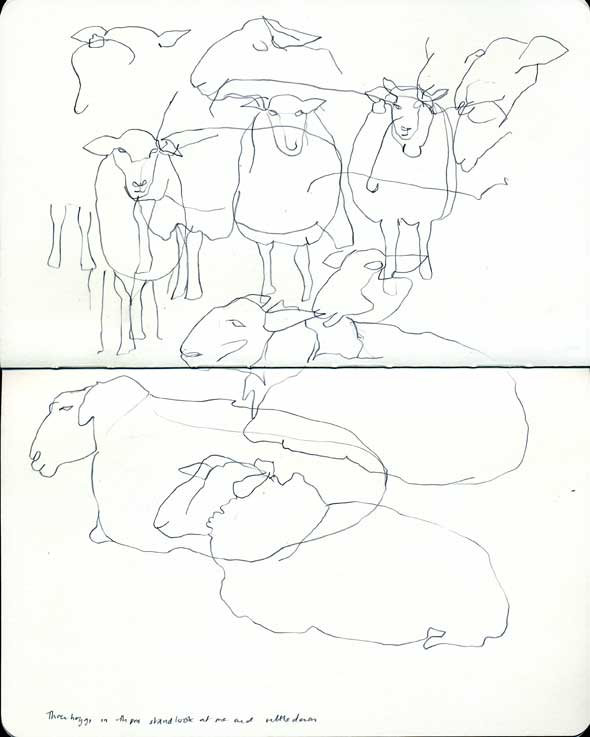
Three hoggs in the pen stand, look at me, and settle down
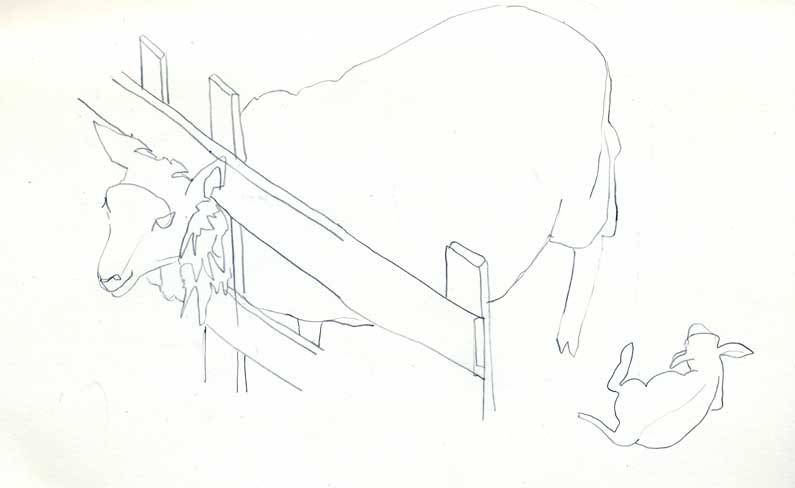
Teeny Weeny, the plucky lamb, won our hearts
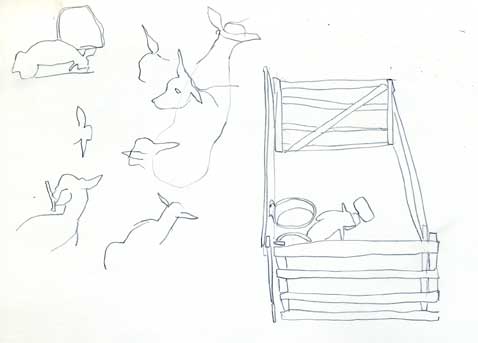
For some reason, Teeny was on her own today. Chewing grass and sniffing. Lambs in the ‘hospital’ didn’t get lunch today, getting bigger now.

The Carrifran Wildwood Story, Myrtle and Philip Ashmole and others, Borders Forest Trust 2009.
see also www.carrifran.org.uk and www.bordersforesttrust.org
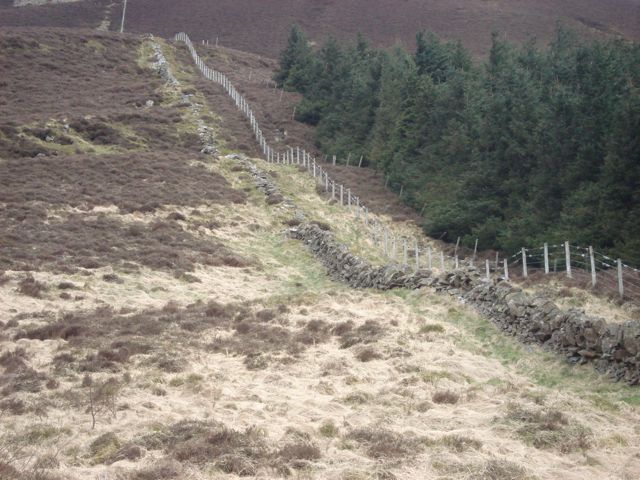
A project of “Ecological Restoration from the Grass Roots” with the vision of bringing back natural vegetation to an entire valley. This required an 11km stock fence to be constructed and checked regularly by volunteers. Much work went into deciding how to undo the work of sheep, goats and cattle over some hundreds of years, with a vision of creating a wildwood where there were no longer even the seeds of former tree cover. Marks of its former use remain on the landscape, including remnants of shielings – used for transhumance farming on higher ground, and sheep stells – circular and winged dykes built for improved agriculture in the 19th century to provide shelter in all weathers. (See pages 100-104, written by Fi Martynoga)
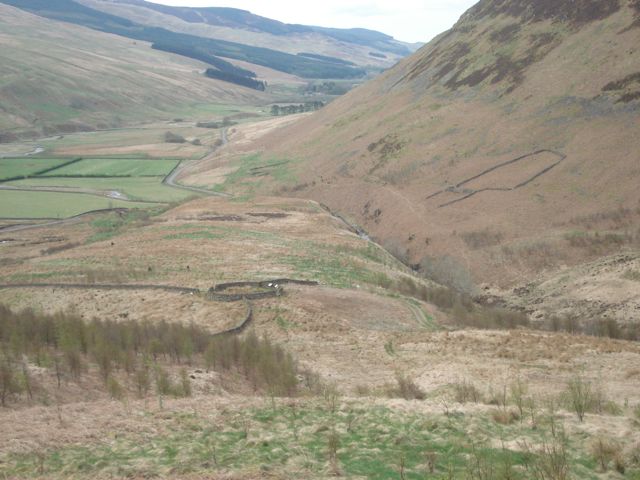
old sheep stell + native woodland regeneration
stock fence + plantation forest
 drawing in the field