no such thing as … clean energy?

I am learning biofuels and biomass power stations cause ‘perverse incentives’  – with local and global damaging economic and ecological consequences.

http://www.biofuelwatch.org.uk/reports.php#climatechange

Or here is a pdf of one of Biofuelwatch’s many useful briefings: briefing-paper-bioenergy_final_1

An image of a wind turbine – standing as a modernistic elegant white tower on an (unnaturally) green sward is seductive – an iconic image to balance the distressing sight of a polar bear on a shrinking iceberg.

Still, there are problems in how this is put into practice: – these notes will be expanded pending further info, but here are some points relevant to the Borders produced by a local forum. Questions of social equity are raised.

• The Southern Uplands are a key target area for wind farm developers because of the significant wind resource, the proximity of grid connections and the relatively easy access to the hill-tops. Within Borders, Dumfries & Galloway, South Lanarkshire and southern Ayrshire there are already 24 functioning wind farms with 2 being constructed. Another 13 have been consented and there are at least 40 in the planning process. There will no doubt be more in the pre-scoping stage.

• The Government urgently needs to look at what might be done to balance the national benefits of exploiting wind energy and the local costs to the economy.

• What will the impacts be on tourism to southern Scotland? Will walkers on the Southern Upland Way want to walk through a landscape where there is always a turbine in view? This will become the case – so will the long distance route survive? Will walkers or turbines generate most local economic benefit in the future?

• What are the current economic benefits of wind farm developments? At present the only significant benefit coming to southern Scotland is in the form of the voluntary contributions made by developers to local communities in the form of a “community benefit fund”. The size of this fund varies depending on the developer and the negotiation skills of the communities involved. The “industry standard” appears to be about £2000 per Megawatt installed (some deals have exceeded this). This amount is usually index-linked for a 25-year period. For local communities this can seem significant sum – but it is much less if considered as a proportion of the profits made by the companies.

• What jobs are created? Very few local job opportunities arise from the construction and maintenance of wind farms. The local landowners gain from the rents paid but much of the upland is in the ownership of very few people, so the local benefits of this are questionable.

• Wind farms are a key part of the Government’s drive to address climate change and increase renewable energy generation, and promote behaviour to reduce carbon emissions. However there is no obvious link between the construction of the wind farm and the energy used locally (other than a tenuous tie-in to the size of some community benefit funds). Thus the wind farms can be viewed as constructions that benefit high consuming urban populations, despoiling an otherwise pristine landscape. If the link between wind energy generation and local energy use could be reinforced, people might see them as being part of the solution, rather than a new problem. This could be done in a number of ways. Community ownership of a turbine (or a whole wind farm) is one way that has been successfully demonstrated elsewhere. Making a more direct link with energy generally is another. This could be by helping communities improve their energy efficiency through insulation or more efficient boilers. Specific support for the installation of income-generating renewable energy technologies such as PV cells, micro-hydro or biomass would also create a valuable legacy.

• While some communities have achieved great things, but many – maybe most – lack the confidence necessary to develop such proposals. If more expert local support could be offered, many more such developments would result. This facilitation could be supported by the wind farm companies if they were obliged to put a little more back into the rural areas they are currently exploiting.

We may be tempted to think that the internet saves energy. In 2009, this was raised as an issue, but seems to have dipped from sight. Sorry but, I still feel uneasy when I receive video downloads of folk’s winter holidays. While individual products might be getting more efficient, overall we are still consuming more energy. Some figures have it that the internet is as big a consumer as aviation.

http://www.treehugger.com/files/2009/05/what-is-the-environmental-impact-of-the-internet.php

http://technology.timesonline.co.uk/tol/news/tech_and_web/article5489134.ece

http://www.guardian.co.uk/technology/2009/may/03/internet-carbon-footprint
mitigation of institutional adaptation

Glasgow University has a sustainable development network – a recent public talk was unmissable, but the audience was far too small given the significance of the matter. Hence this blog posting.

From the blurb:

“Speaker: Professor Sir John Lawton, CBE, FRS (Chairman Royal Commission on Environmental Pollution, RCEP)

The Royal Commission on Environmental Pollution’s recent report explores the challenges facing UK institutions as they respond to climate change. Adaptation is not an alternative to mitigation; even if CO2 emissions were to stop tomorrow, significant climate change is inevitable, and the less successful we are at mitigation, the bigger the challenges of adaption. These challenges include considerable uncertainty about the magnitude and rates of climate change in different parts of the UK; recognising that adaptation will need to be an ongoing process, not a single action; and a willingness to incorporate an adaptation test into all major decisions.”

http://www.gla.ac.uk/departments/glasgowsustainabledevelopmentnetwork/newsandevents/previousevents/

You can download a copy of the report:

http://www.rcep.org.uk/reports/index.htm

The Royal Commission on Environmental Pollution is about to be ‘burnt’ in the quango bonfire. Professor Sir John Lawton is the chair – his delivery was expert, encouraging, humorous, inspiring and very worrying. These are points he made, that add to what you can read in the report.

I believe this is the gist of what he said  – please alert me to any misunderstandings if you were there.

After March, the government will not have an expert body to advise on environmental pollution. Because it has been disbanded, John Lawton no longer expects written ministerial responses to the RCEP report – which would otherwise have been necessary.

Climategate has done damage to the process of adaptation. In UK, 30% of the public do not believe. In US, 50%. (Possibly UK is not as bad as US because UK laws inhibit the publication of untruths in the media. Mostly people receive info from the media. In the media, climate deniers have not been subject to the same scrutiny of sources. It is absurd to cast climate science as a conspiracy to invent a problem. Science is organised scepticism. The evidence is irrefutable.

While many industries have not got hold of adaptation, tellingly, the insurance industry is right ahead of the game.

There has been progress with the Climate Change legislation in UK Parliament – and better in Scotland. But far from enough. At least in Scotland and greater London, there is a duty in law on public agencies. Elsewhere it is voluntary. Land use planning is central, and needs resourcing. There is some progress in Scotland (though it’s efficacy was questioned from the floor). At least in Scotland, the government departmens have the possibiity of talking to each other, impossibly big and divided in London.

The RCEP committee worked on principles of successful adaptation. It is more complex by far than mitigation. It must be done locally, flexibly to situations. It requires thinking of a range of probabilities. There is no endpoint. It requires working with many different interests and organisations. For example the interest groups in a coastal area are numerous – a spaghetti of committees.

What is adaptive capacity? framing, learning, implementation.

Local projections test climate science the most. Hampshire County Council is one of the more switched on. How nice! A climate like Bordeaux, it learnt from the climate projections. It also learnt the chalk streams will dry up and the beech woods will die by 2080. Less nice. Details, Sir John Lawton suggested assist public engagement.

The Thames Estuary 2100 is unusual – an innovative response, asking the right questions. Prioritising flexiblity, and community consultation.

http://www.environment-agency.gov.uk/homeandleisure/floods/104695.aspx

Loss of coastal land in the south east poses serious issues of social justice. Currently compensation is on the basis of property ownership. What if you rent? What if you lose business interest or family connections? The commission visited Happisburgh in Norfolk, which will not be protected by public resources and is fast disappearing, and found these issues becoming apparent there, with various responses from residents.

The above came from John Lawton’s talk.  As a postscript, I have been part of a lobby of my MP about public agencies duties in resposne to climate change. The particular question was about how the NHS was curbing it’s carbon emissions in line with recent legislation. My MP passed this query on to Andrew Lansley, and we got his response this morning, restating this is the Greenest Government ever. Note this: “Following the recent White Paper Equity and Excellence […] the NHS in England will be freed from political micromanagement and will be responsible at local level for taking appropriate  measures to improve the health service, including carbon performance.” Our question was how carbon emission reduction would be ensured. It seems it won’t be.

I feel that governmental hands are being washed, of responsibility for adaptation, mitigation too.

PS A report on dismantling of the RCEP on http://www.guardian.co.uk/environment/2010/jul/22/government-axes-sustainability-watchdog

on the idea of ‘tree-lines’, encountered on sheepwalks

sheep and trees held apart, cast as incompatible

trees as shelter, human and non-human

deadwood,  ‘snags’, woody debris

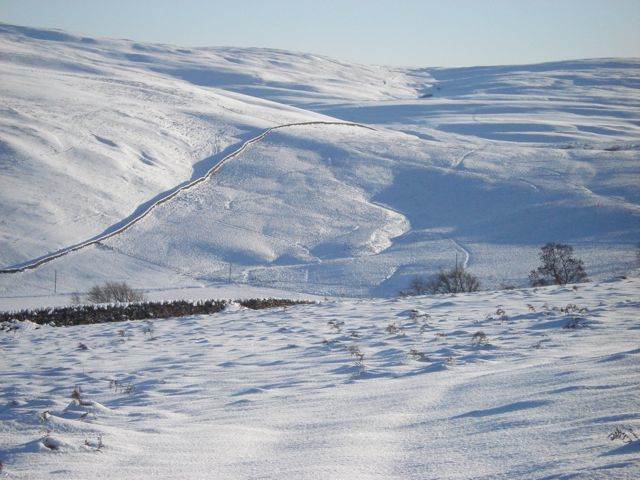
snow modelling lines

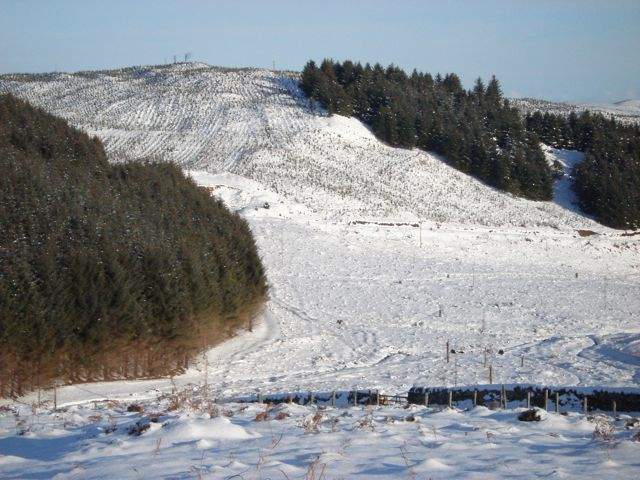
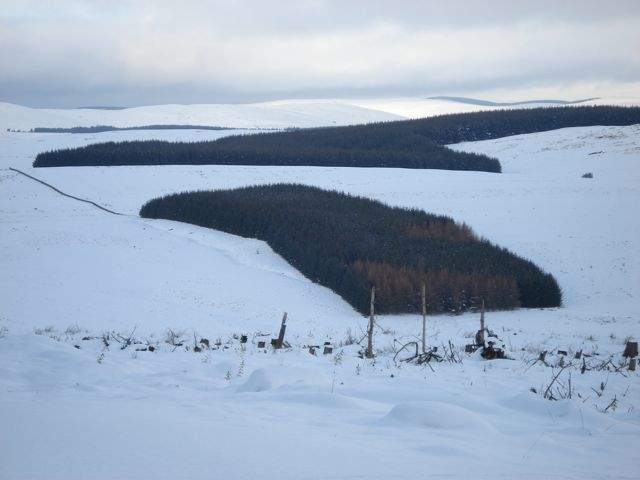
zones of clear-fell, replanting, first growth – delineated from pasture

broadleaves in a valley – snow was so early this year, their leaves blew over the first fall

blocks, ranks

tree-lines –  a malleable idea for further investigation:

… land-use … climatic transition … life-lines  and shelter … diagrammatic rendering (productivity, biomass, carbon sequestration) … pattern and repetition … supply lines … cultural entanglements …

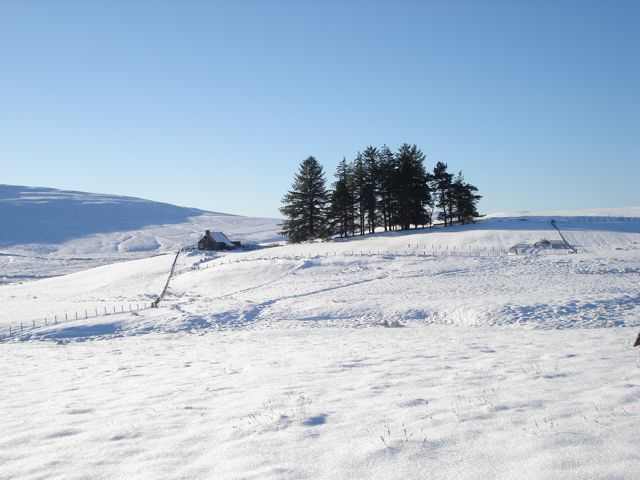
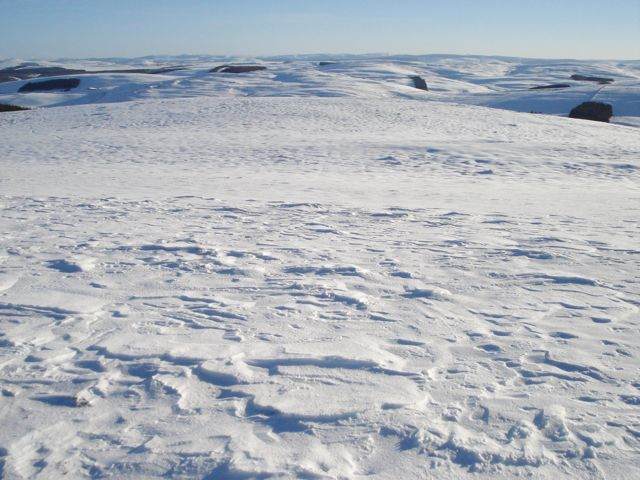
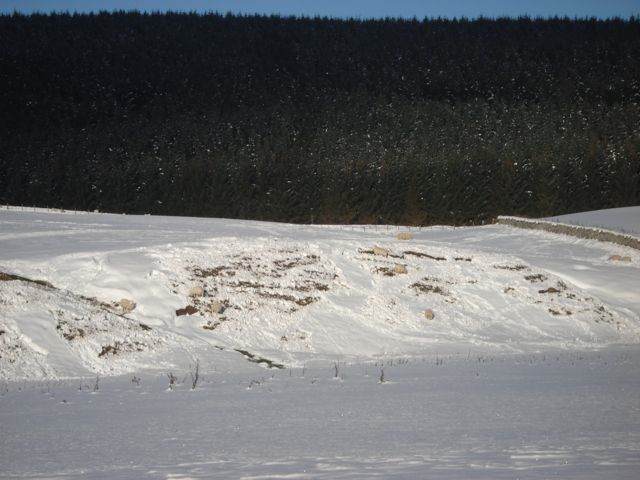
early winter snow

3.30 in the afternoon, 8 December

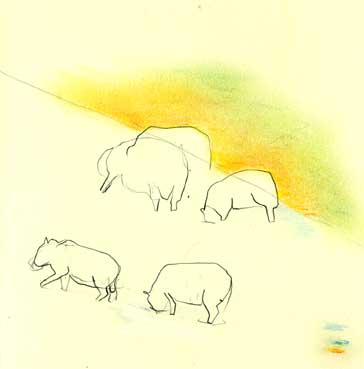
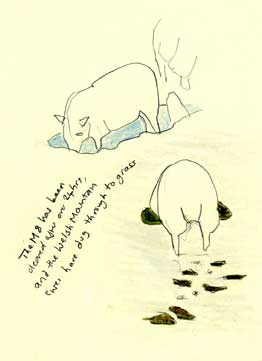
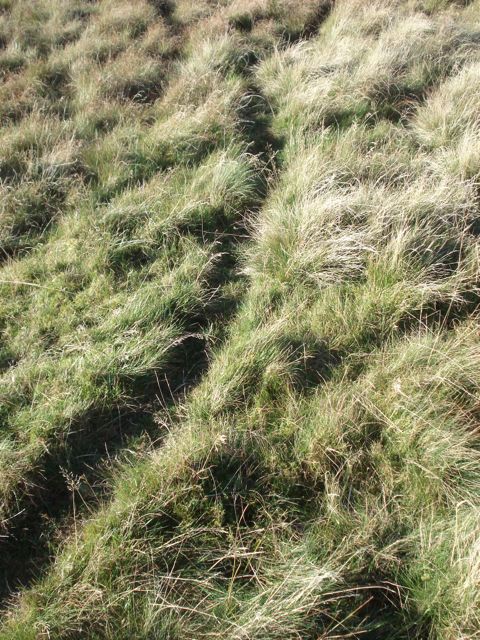
The M8 has been re-opened after more than 24 hours  – and the Welsh Mountain ewes have dug through to grass

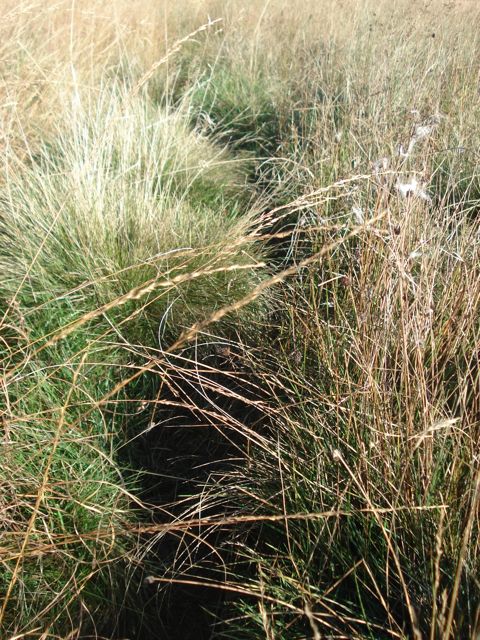
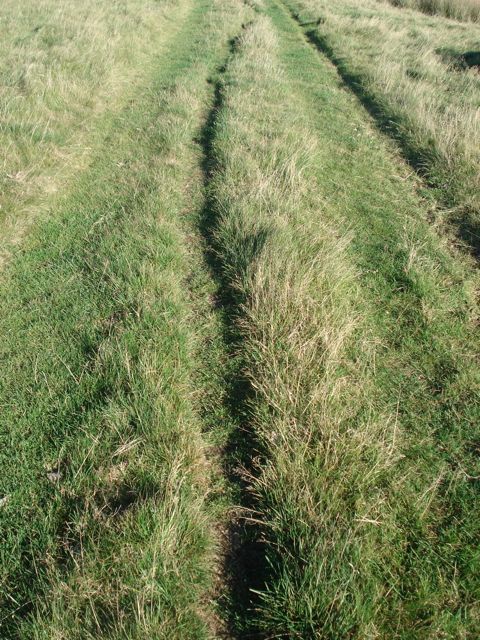
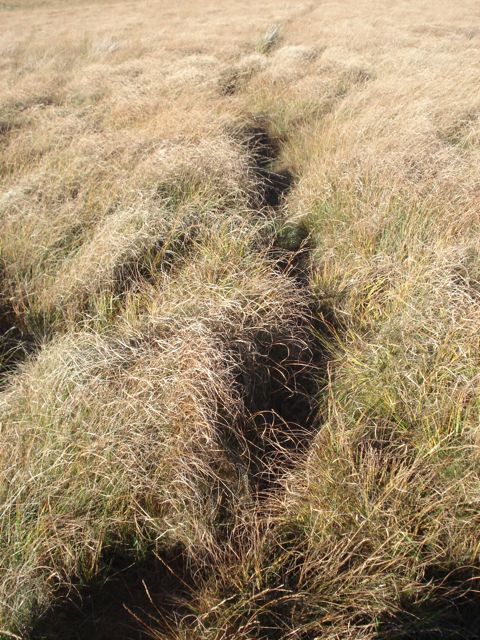
on sheep walks


Determining on sheepwalks as a line of enquiry – a malleable idea to frame such ideas:

the activity of sheep making walks – others using sheepwalks to walk, and look – gathering and departure – compression, degradation – lines of exit and transformation –  incompleted patterns

Summertime sheep

This summer, a lot of sheep on display, circulating in various forms, stemming perhaps from Henry Moore’s popular pieces:

http://www.henry-moore.org/pg/exhibitions/harlow-sheep

http://www.cartmel-sheepyvillage.com/index.html

With a new variant in Liverpool: http://www.superlambbanana.com/home.php?/WHAT?

“The Super Lamb Banana was the original work of Japanese-based artist Taro Chiezo. Commissioned for the Art Transpennine Exhibition of 1998, the sculpture was a controversial, but welcome addition to the public art arena in Liverpool. Standing an impressive seventeen feet tall and comprised of concrete and steel, the statue first attracted interest from its original position on the Strand. The unusual artwork was created to warn of the dangers of genetically modified food, whilst being appropriate to the city of Liverpool due to the port’s rich history in the trade of lambs and the import of bananas.”

sleep furiously

Film: Gideon Koppel, Sleep Furiously, 2007, UK

The title comes from Chomsky’s nonsense sentence: “Colourless green ideas sleep furously.”

An interview with the film maker, Gideon Koppel, describing the process of making a film in a remote Welsh farming community where he had been brought up. His film-making style developed as did the project itself through getting the work funded. It is an elegy, with long and careful glances mindful of time and light, with thoughtful use of music:

http://www.bbc.co.uk/filmnetwork/features/sleep_furiously_interview

And a review of the film on:

http://www.guardian.co.uk/film/2009/may/29/sleep-furiously-film-review

Also, the film won Guardian Best First Film in 2010.

http://www.guardian.co.uk/film/2010/feb/11/sleep-furiously-wins-best-first-film

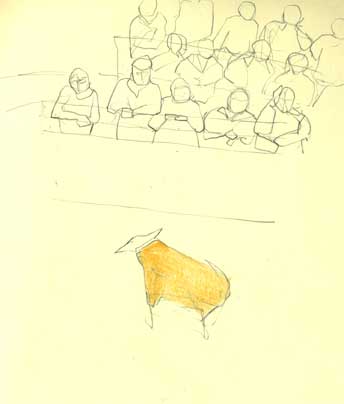
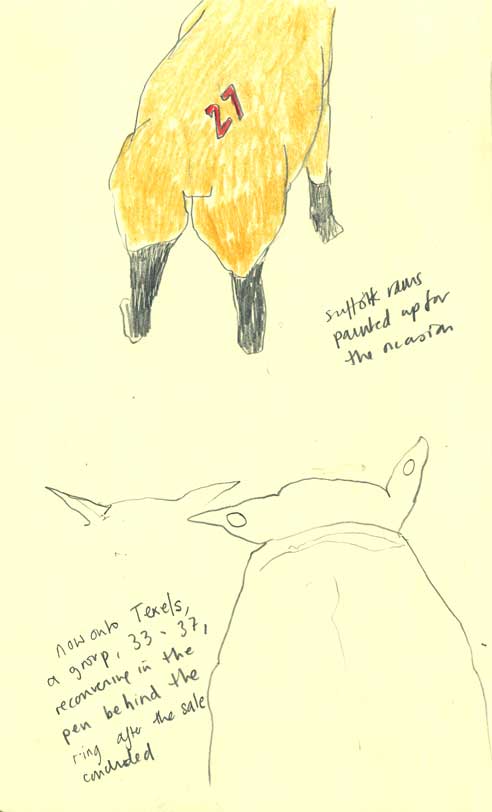
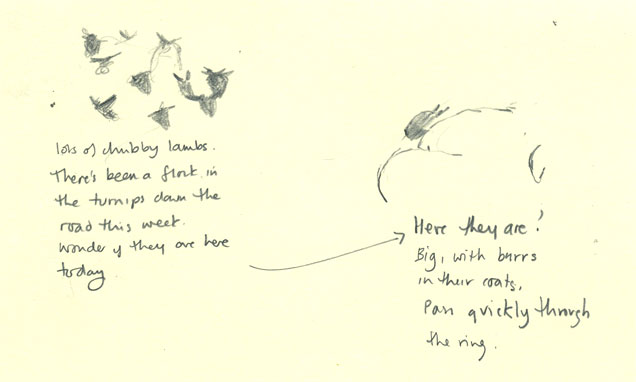
autumn ram, lamb and ewe sales

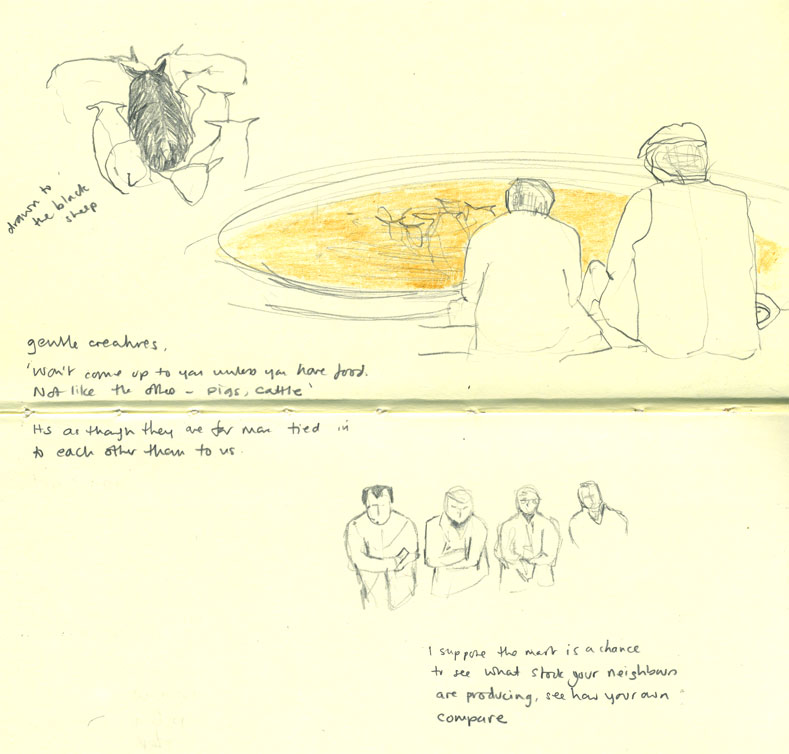
a smaller sale than at Kelso earlier in the month, mainly Texels and Suffolk tups

I am drawn to the black sheep

the season’s work in some way concluded, a finished flock of lambs move on